

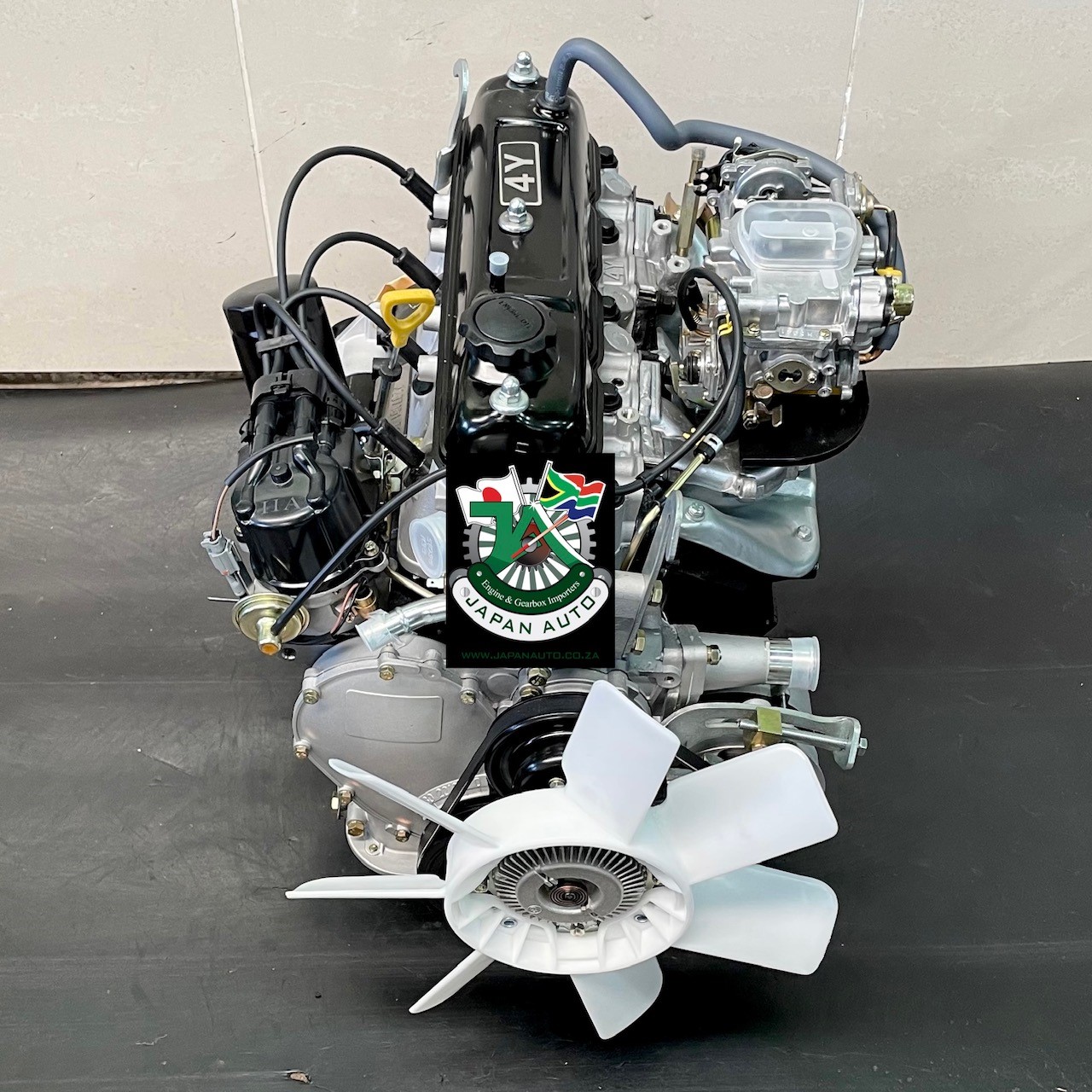
If you are searching for a used Toyota 3Y engine for sale, the first priority should be matching the replacement to your vehicle's exact engine code and configuration. The Toyota 3Y is a 1,998 cc, 2.0-liter four-cylinder gasoline engine, but the 3Y family includes several versions with different fuel systems and applications. The standard 3Y is carbureted, while variants such as the 3Y-E and 3Y-EU use fuel injection; LPG versions are also available.
For that reason, buying the cheapest engine labeled “3Y” is not necessarily the simplest solution. A better approach is to verify the engine code, donor vehicle, fuel system, included components, condition and warranty before ordering. This guide explains what to look for when sourcing a replacement Toyota 3Y engine and how to reduce the risk of a compatibility problem.
What Is the Toyota 3Y Engine?
The Toyota 3Y belongs to Toyota's Y-series engine family. The standard version is an overhead-valve, eight-valve, 1,998 cc gasoline engine with an 86 mm bore and 86 mm stroke. Reference specifications list approximately 88 PS and 155 Nm for the standard 3Y, although specifications vary between versions.
The 3Y was used in several Toyota applications, including certain HiAce, Hilux and Dyna/ToyoAce vehicles, as well as some Crown models. Other 3Y variants appeared in additional Toyota vehicles and different markets.
That application history is important for anyone shopping for a Toyota 3Y replacement engine because the engine family is broader than one single configuration.
Common 3Y Variants
|
|
|
|
|
|
|
|
|
|
|
|
|
|
|
|
|
|
|
|
|
|
|
|
|
|
|
|
|
|
|
|
|
|
|
|
|
|
|
|
These variants share the 1,998 cc displacement but are not automatically interchangeable.
Why Engine Code Matters When Buying Used
A used engine listing may use a broad description such as “Toyota 2.0 engine,” “3Y motor” or “Toyota replacement engine.” Those descriptions are not enough to establish compatibility.
The complete engine code provides a much more useful starting point.
For example, the standard 3Y is carbureted, whereas the 3Y-E uses fuel injection. The 3Y-PE is designed for LPG and fuel injection.
Before purchasing, compare:
- Original engine code
- Replacement engine code
- Vehicle model
- Model year
- Fuel type
- Fuel-delivery system
- Engine mounts
- Transmission connection
- Intake and exhaust arrangement
- Wiring and sensors
- Included accessories
A replacement engine may be mechanically related to the original while still requiring different supporting parts.
Toyota Vehicles Associated With the 3Y
The 3Y family was used across several Toyota platforms. The standard 3Y is documented in applications including the third-generation HiAce, Hilux and Dyna/ToyoAce. It was also used in certain export-market Crown applications.
The 3Y-E and 3Y-EU appeared in different applications, including certain Mark II, Hilux Surf/4Runner and TownAce configurations.
The LPG-oriented 3Y-PE was used in Toyota Crown and Comfort applications.
Because these applications span different vehicles and markets, identifying the donor vehicle can be nearly as useful as identifying the engine itself.
What Should You Check Before Buying a Used 3Y Engine?
A successful replacement starts with gathering the right information.
1. Confirm Your Original Engine
Locate the engine identification marking and record the complete code. If the vehicle documentation provides engine information, compare that information as well.
If you cannot confidently identify the engine, have a qualified technician inspect it before ordering a replacement.
2. Ask About the Donor Vehicle
A reputable used-engine listing should provide information about the vehicle the engine came from when available.
Ask for:
- Donor make and model
- Model year
- Engine code
- Fuel type
- Reported mileage
- Reason for removal
- Available testing information
Knowing the donor application can help identify whether the replacement resembles your original setup.
3. Find Out What Is Included
One of the most common sources of confusion is the phrase “complete engine.”
Depending on the seller, a complete assembly might include several external components, while another listing may include only the long block.
Confirm whether the engine includes:
- Cylinder head
- Intake manifold
- Exhaust manifold
- Carburetor or injection equipment
- Distributor
- Alternator
- Starter
- Sensors
- Brackets
- Flywheel or flexplate
- Other accessories
Do not assume that every part visible in a photograph is included.
How to Evaluate the Condition of a Used Toyota 3Y
A used engine is a mechanical component with a history. The more information you can obtain about that history, the easier it becomes to compare different options.
Ask About Testing
If the seller provides testing information, ask what was actually tested.
Useful information can include:
- Compression testing
- Oil-pressure testing
- Running condition before removal
- Leak inspection
- Cooling-system condition
- Visible smoke or abnormal noise
- Internal corrosion
- Storage condition
Testing information does not eliminate every risk, but it provides more useful evidence than photographs alone.
Consider Mileage Alongside Condition
Mileage can be relevant, but it should not be treated as the only indicator of engine quality.
Two used engines with similar mileage may have experienced very different operating and maintenance conditions. A documented donor history and available testing information can therefore be useful when comparing engines.
Used 3Y Engine or Rebuild the Original?
When an original Toyota 3Y develops a serious problem, owners often have to decide between rebuilding the existing engine and sourcing a replacement.
|
|
|
|
|
|
|
|
|
|
|
|
|
|
|
|
|
|
|
|
|
|
|
|
|
|
|
|
|
|
|
|
Neither option is automatically appropriate for every vehicle. The condition of the original engine, availability of a compatible replacement and local labor costs all matter.
Signs That Engine Replacement May Be Worth Considering
A replacement may be considered when the existing engine has significant damage or when rebuilding it is impractical.
Possible situations include:
- Severe internal wear
- Major overheating damage
- Low compression
- Serious oil-consumption issues
- Cracked major components
- Extensive corrosion
- High rebuilding costs
- Difficulty sourcing individual internal parts
A professional inspection should determine whether replacement or rebuilding makes more sense for the specific vehicle.
How to Search for a Toyota 3Y Replacement Engine
A highly specific search can save time compared with searching only for “Toyota engine.”
Try combining the engine code with the vehicle information.
Useful search terms include:
- Used Toyota 3Y engine
- Used Toyota 3Y engine for sale
- Toyota 3Y replacement motor
- Toyota 3Y 2.0 engine
- Used Toyota 3Y-E engine
- Toyota 3Y carbureted engine
- Toyota 3Y engine assembly
- Toyota HiAce 3Y engine
- Toyota Hilux 3Y engine
- Toyota 3Y replacement engine
If your original engine is a specific variant, include that code in your search rather than relying on “3Y” alone.
What Happens After You Find a Matching Engine?
Finding the engine is only the first stage.
Step 1: Verify Compatibility
Compare the replacement engine against your original configuration.
Step 2: Confirm Included Parts
Get a clear list of the components supplied with the engine.
Step 3: Inspect Before Installation
Check for visible damage, corrosion, missing parts and fluid leaks.
Step 4: Transfer Compatible Components
Some applications may require accessories or supporting components from the original engine to be transferred to the replacement.
Step 5: Complete Appropriate Service
Have a technician determine whether accessible maintenance items should be addressed before installation.
Step 6: Test After Installation
Once installed, the vehicle should be checked for leaks, abnormal noises, warning indicators and proper operation.
PAA: People Also Ask
Is the Toyota 3Y a 2.0-liter engine?
Yes. The Toyota 3Y has a displacement of 1,998 cc, generally described as a 2.0-liter engine.
What vehicles used the Toyota 3Y?
The standard 3Y was used in certain HiAce, Hilux and Dyna/ToyoAce applications, with additional 3Y variants used in other Toyota models and markets.
Is the Toyota 3Y carbureted?
The standard 3Y is carbureted. Other variants, including the 3Y-E and 3Y-EU, use fuel injection.
Are all 3Y engines interchangeable?
No. Different 3Y variants can have different fuel systems, emissions equipment, accessories and vehicle applications. Compatibility should be verified using the complete engine code and vehicle specifications.
What is a 3Y-E engine?
The 3Y-E is a fuel-injected version of the 1,998 cc 3Y engine family. Its configuration differs from the standard carbureted 3Y.
What information should I provide when searching for a replacement?
Provide your vehicle's year, model, engine code, fuel type and, when available, VIN or chassis information. Photos of the existing engine identification can also help.
Should I buy a complete 3Y engine or long block?
That depends on which components from your existing engine are usable and which components are included with the replacement. Confirm the exact contents of the listing before purchasing.
FAQs About Used Toyota 3Y Engines
1. How do I know if a used 3Y engine will fit my Toyota?
Start by matching the engine code and vehicle application. Then verify mounting points, fuel system, transmission connection, wiring and accessories. A qualified technician can confirm compatibility before installation.
2. Is a used Toyota 3Y engine ready to install?
Not always. Depending on how it is sold, accessories may need to be transferred and service work may be appropriate before installation.
3. Does the donor vehicle matter?
Yes. The donor vehicle can provide useful information about the engine's original configuration and help distinguish between different 3Y variants.
4. What should I ask a seller before buying?
Ask for the engine code, donor vehicle, mileage information, testing details, included components, condition information and warranty or return terms.
5. Can I use my original accessories on a replacement 3Y?
Some accessories may be transferable, but compatibility depends on the specific engine versions and vehicle. Compare each component before installation.
6. Is a low-mileage used engine always the better choice?
Not necessarily. Mileage should be considered alongside maintenance history, operating conditions, testing information and overall condition.
7. What should I do if my engine code does not match the replacement?
Do not assume the engine will fit simply because both are labeled 3Y. Ask for compatibility confirmation or have a qualified technician compare the two configurations.
Used Toyota 3Y Engine Buying Checklist
Before placing an order, confirm:
- Complete engine code
- Vehicle year and model
- Fuel type
- Fuel-delivery system
- Donor vehicle information
- Reported mileage
- Testing information
- Included components
- Engine-mount compatibility
- Transmission compatibility
- Warranty details
- Return requirements
- Shipping arrangements
The most important lesson when shopping for a used Toyota 3Y engine for sale is to identify the exact configuration before comparing prices. The 3Y family covers carbureted, fuel-injected and LPG variants, and applications differ across Toyota vehicles and markets.
A careful compatibility check can help you select a replacement that fits the intended application and avoid unnecessary parts, installation or modification problems

Leave a Reply