

A beautiful countertop can transform the appearance and functionality of a kitchen or bathroom. However, achieving a professional result requires more than selecting an attractive stone, quartz surface, or solid-surface material. Accurate measurements and careful preparation are equally important. One of the most essential steps in countertop installation Jacksonville FL is creating a precise template before cutting the countertop material. 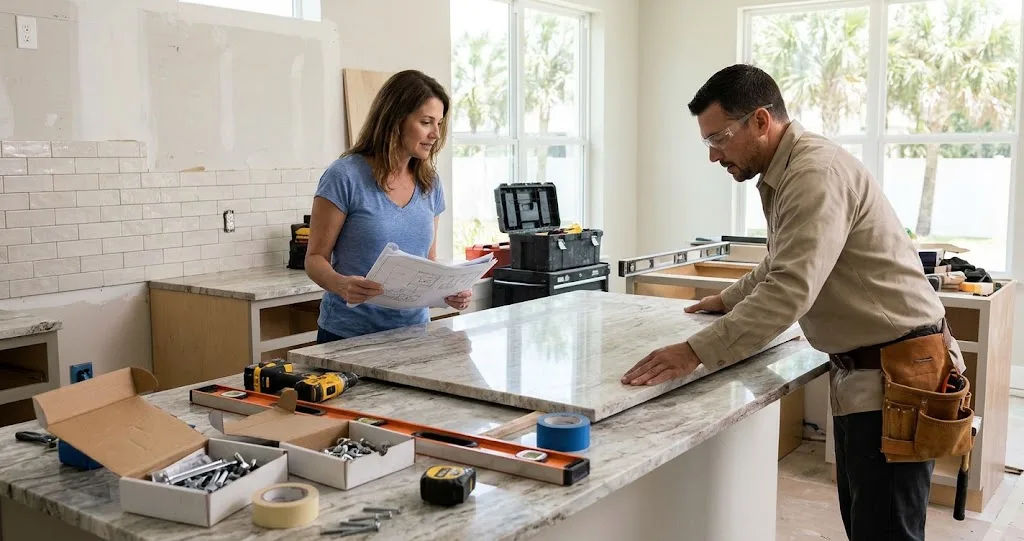 A countertop template is a detailed pattern that represents the exact dimensions and shape of the surface being installed. It helps professionals understand the layout, identify unusual angles, measure openings, and account for walls, cabinets, sinks, and appliances. Without this important step, even a small measurement mistake can create significant installation problems.
When homeowners invest in new countertops, they naturally expect the finished surface to fit perfectly and look attractive. A properly prepared template helps make that possible. It reduces unnecessary cutting, prevents costly mistakes, and ensures that the countertop matches the existing kitchen or bathroom layout.
Understanding why templating matters can help homeowners make better decisions during a remodeling project. Let's explore how the process works, why professionals use it, and how it contributes to a successful countertop installation.
What Is a Countertop Template?
A countertop template is a physical or digital pattern used to determine the exact shape and measurements of a new countertop. It serves as a guide for cutting the selected material before the installation begins.
Professional countertop installers create templates after examining the cabinets and surrounding spaces. They record important measurements, including countertop depth, length, corners, edges, and openings for sinks or cooktops.
Templates can be created using traditional materials or advanced digital measuring equipment. Both methods help installers transfer the dimensions of the actual installation area onto the countertop material.
Physical Countertop Templates
Traditional templates are commonly made from thin strips of plastic, wood, or other lightweight materials. Installers arrange these strips along the countertop area to create an accurate outline.
They carefully connect the strips, mark important details, and check the overall shape. Once completed, the template represents the countertop's required dimensions.
This method is useful for kitchens with unusual layouts, angled walls, or complicated countertop designs.
Digital Countertop Templates
Modern countertop companies may use laser measuring devices and digital templating systems. These tools capture detailed measurements and create computer-generated layouts.
Digital templates can record complicated angles, curves, and openings with excellent precision. They also allow professionals to review the design before cutting begins.
Both approaches serve the same purpose: helping the finished countertop fit the installation area accurately.
Why Does Countertop Installation Jacksonville FL Need a Template?
Templating is important because kitchens and bathrooms rarely have perfectly straight walls, completely square corners, or identical cabinet dimensions.
Even newly installed cabinets can have small variations that affect countertop measurements. A template accounts for these differences and gives fabricators a reliable pattern to follow.
For homeowners planning countertop installation Jacksonville FL, this preparation helps prevent problems that might otherwise appear during the final installation.
1. Ensures Accurate Measurements
Accurate measurements are the foundation of a successful countertop project. A countertop that is too long, too short, or incorrectly shaped may not fit the cabinets properly.
A template allows installers to measure the actual installation space instead of relying entirely on general dimensions.
For example, two kitchen walls may appear straight but have slightly different angles. Measuring only the overall length might not reveal this issue.
A detailed template captures these differences and helps fabricators produce a countertop that matches the existing layout.
It also helps prevent measurement mistakes around corners, cabinet edges, and wall connections.
2. Accounts for Uneven Walls
Many homeowners assume that kitchen walls are perfectly straight. In reality, walls can have small curves, uneven surfaces, or slight variations in their angles.
These irregularities can create visible gaps between the countertop and backsplash.
A professional template identifies these conditions before the countertop is manufactured.
Installers can then make the necessary adjustments to the countertop shape. This helps create a cleaner appearance and reduces the need for excessive modifications during installation.
In older Jacksonville homes, where walls and cabinets may have shifted over time, this step can be particularly valuable.
3. Prevents Expensive Cutting Mistakes
Countertop materials such as granite, quartz, and marble can represent a significant investment. Cutting these materials incorrectly may result in wasted material and additional expenses.
A template gives fabricators a clear cutting guide before they begin working on the slab.
It helps them identify the required dimensions, edge profiles, corners, and openings.
When homeowners choose professional countertop installation Jacksonville FL, accurate templating helps reduce the possibility of manufacturing errors.
Preventing mistakes before fabrication is generally easier and less expensive than correcting them after the countertop has been cut.
4. Provides Proper Sink and Cooktop Openings
Kitchen countertops often include openings for sinks, faucets, cooktops, and other fixtures.
These openings must match the specifications of the selected appliances and plumbing fixtures.
A template helps installers record the correct placement and dimensions of each opening.
For example, an incorrectly positioned sink opening could interfere with cabinet supports or plumbing connections.
Similarly, a cooktop opening that is too large or too small may create installation difficulties.
By including these details in the template, professionals can prepare the countertop for the intended fixtures.
How Does the Countertop Templating Process Work?
The templating process follows several important steps. Each stage helps ensure that the countertop is prepared according to the actual dimensions of the installation area.
1. Completing Cabinet Installation
Before creating a countertop template, installers generally need the cabinets to be fully installed and properly secured.
This is important because countertops rest directly on the cabinet structure.
If the cabinets are moved after measurements have been taken, the original template may no longer match the installation area.
Professionals check cabinet alignment, stability, and levelness before proceeding.
They also examine whether the cabinets provide sufficient support for the selected countertop material.
2. Inspecting the Installation Area
The next step involves examining the kitchen or bathroom carefully.
Installers inspect walls, corners, cabinet edges, plumbing connections, and appliance locations.
They also identify obstacles that could affect the countertop design.
These might include electrical outlets, windowsills, pipes, decorative panels, and existing backsplash materials.
This inspection helps professionals understand the space before creating the template.
3. Taking Detailed Measurements
Installers measure the length and depth of the countertop area.
They also record the positions of corners, walls, cabinet edges, and fixture openings.
For complicated layouts, they may take several measurements to confirm that the dimensions are accurate.
This information becomes the foundation of the template.
During countertop installation Jacksonville FL, careful measuring is especially useful when working with large kitchens, islands, breakfast bars, and unusual countertop shapes.
4. Creating the Template
After collecting the necessary measurements, professionals create the physical or digital template.
They outline the countertop's shape and mark the positions of important features.
These details may include:
-
Sink and cooktop openings.
-
Faucet holes.
-
Corner angles.
-
Countertop overhangs.
-
Backsplash requirements.
-
Seams and joining locations.
-
Edge profiles and decorative details.
The completed template provides fabricators with the information needed to prepare the countertop.
5. Reviewing and Confirming the Design
Before cutting the countertop material, professionals review the template for accuracy.
They confirm measurements, fixture positions, and design specifications.
Homeowners may also have an opportunity to review important details, such as seam placement and overhang dimensions.
This step helps identify misunderstandings before fabrication begins.
Once the details are approved, the template can be used to guide the cutting process.
How Does Templating Improve Countertop Appearance?
A countertop should do more than cover cabinets. It should contribute to the overall appearance of the kitchen or bathroom.
Templating helps achieve a polished result by improving the alignment, proportions, and positioning of the countertop.
Creates Clean and Consistent Edges
Accurate templates help fabricators cut countertops according to the intended design.
This creates more consistent edges and helps the countertop follow the cabinet layout.
Clean edges are especially important when installing materials with decorative profiles or visible natural patterns.
Improves Seam Placement
Large countertops sometimes require multiple pieces of material.
The locations where these pieces meet are called seams.
A template helps installers plan seam positions before cutting begins.
This is important because seams can affect both appearance and structural performance.
Professionals consider countertop dimensions, material patterns, cabinet support, and the overall layout when deciding where seams should go.
Although seams cannot always be eliminated, thoughtful planning can make them less noticeable.
Maintains Consistent Overhangs
Countertop overhangs provide additional working space and can improve the appearance of kitchen islands and breakfast bars.
However, inconsistent overhangs may make the finished installation look uneven.
A template helps fabricators understand how far the countertop should extend beyond the cabinets.
It also helps determine whether additional brackets or supports are necessary.
Why Is Templating Important for Different Countertop Materials?
Different countertop materials have different characteristics. Some are more flexible, while others require specialized cutting and handling techniques.
Templating helps professionals prepare each material according to its specific requirements.
Granite Countertops
Granite is a natural stone known for its durability and distinctive patterns.
Because granite slabs are heavy and difficult to modify after fabrication, accurate measurements are essential.
Templates help fabricators determine the correct cutting dimensions and plan the placement of natural patterns.
They also help identify potential weak areas around corners and openings.
Quartz Countertops
Quartz countertops are manufactured using natural quartz and binding materials.
They are available in many colors, patterns, and finishes.
A precise template helps ensure that quartz pieces fit properly around cabinets, walls, and fixtures.
It also assists with planning seams and matching patterns where multiple pieces are required.
Marble Countertops
Marble is appreciated for its elegant appearance and natural veining.
However, it requires careful handling because certain areas can be more vulnerable to cracking or damage.
Templates help professionals plan cuts and position natural patterns in visually appealing ways.
They also help minimize unnecessary material waste.
Solid-Surface Countertops
Solid-surface countertops offer flexibility in design and can be manufactured with integrated features.
Templating helps ensure that curves, edges, and fixture openings match the intended design.
It is especially useful for custom layouts that require unusual shapes or seamless transitions.
What Problems Can Happen Without a Countertop Template?
Skipping the templating process can introduce several risks.
Although some straightforward countertop projects may use verified standardized dimensions, custom installations generally benefit from measuring the actual space.
Here are some common problems that can occur when measurements are inaccurate.
Incorrect Countertop Dimensions
A countertop that is too large may not fit between walls or around cabinets.
A countertop that is too small may leave unwanted gaps.
Both situations can affect the appearance and functionality of the finished surface.
Misaligned Sink Openings
Incorrect sink measurements can create problems with installation, plumbing, and countertop support.
The opening may not accommodate the selected sink or leave enough space for mounting hardware.
Uneven Countertop Overhangs
Poor measurements can produce inconsistent edges along cabinet fronts.
This can make the entire kitchen look unfinished, even when expensive countertop materials are used.
Increased Project Costs
Correcting fabrication mistakes may require additional labor, replacement materials, or a completely new countertop piece.
These expenses can increase the overall remodeling budget.
Professional templating helps reduce these risks by identifying important details before manufacturing begins.
How Does Jacksonville's Climate Affect Countertop Templating?
Jacksonville has a warm, humid climate, which can influence certain materials and construction conditions.
Humidity and temperature changes may affect wood cabinets, particularly when moisture levels are not properly controlled.
Cabinets should be installed securely and allowed to settle into their intended position before countertop measurements are finalized.
This helps reduce the possibility of dimensional changes affecting the countertop fit.
Homeowners should also consider how sunlight, moisture, and everyday kitchen use may affect their selected material.
During countertop installation Jacksonville FL, experienced professionals can evaluate these conditions and recommend suitable materials and installation practices.
For example, natural stone and engineered quartz are popular choices because they offer attractive surfaces with different maintenance requirements.
However, proper sealing, cleaning, and moisture management may still be necessary depending on the material.
What Should Homeowners Do Before Templating?
Homeowners can help make the templating appointment more productive by preparing the installation area.
A little preparation can prevent unnecessary delays and improve communication with the countertop contractor.
Complete Cabinet Installation
Make sure all cabinets are installed, secured, and positioned correctly.
If any cabinets are still being adjusted, discuss the timing with the installer before scheduling the templating appointment.
Select Appliances and Fixtures
Choose the sink, cooktop, and other important fixtures before measurements are finalized.
Having the actual product specifications available helps installers create correctly sized openings.
Whenever possible, keep the manufacturer's installation instructions nearby.
Discuss Edge Profiles
Countertop edges can influence the overall design.
Popular options include straight, beveled, rounded, and decorative profiles.
Discuss these choices with the contractor so they can be included in the fabrication plan.
Confirm Backsplash Requirements
Decide whether the project includes a separate backsplash, a full-height backsplash, or no backsplash.
These choices can affect countertop measurements and wall preparation.
Discuss Seams and Overhangs
Ask where seams will be located and how far the countertop will extend beyond the cabinets.
These details should be discussed before fabrication begins.
Clear communication helps ensure that the finished countertop matches the homeowner's expectations.
How to Choose a Professional Countertop Installer in Jacksonville
Choosing an experienced contractor is important because even high-quality materials can produce disappointing results when installation is poorly managed.
Homeowners should evaluate several factors before selecting a countertop company.
Check Experience and Previous Projects
Look for contractors who have experience installing the specific material you want.
Ask to see photographs of previous projects or examples of completed kitchen and bathroom installations.
This can help you understand the quality of their workmanship.
Ask About the Templating Process
A reliable installer should explain how measurements are taken and how the template is checked before fabrication.
Ask whether the company uses physical templates, digital measuring systems, or both.
The goal is to understand how the contractor reduces measurement errors.
Request a Detailed Estimate
A written estimate should explain the materials, fabrication, installation labor, and additional services included in the project.
Ask whether templating is included in the quoted price.
You should also clarify whether removing old countertops, modifying cabinets, or installing backsplashes involves additional charges.
Discuss Installation Timelines
Ask how long the templating, fabrication, and installation stages are expected to take.
The timeline may depend on material availability, project complexity, and the contractor's schedule.
A professional company should communicate possible delays and explain what happens if measurements need to be corrected.
Review Warranties and Customer Feedback
Check customer reviews and ask about workmanship warranties.
A trustworthy contractor should be willing to explain the company's policies regarding fabrication defects and installation problems.
These details can provide additional confidence before beginning the project.
Is Countertop Templating Worth the Investment?
Yes, countertop templating is generally worth the investment because it helps prevent mistakes that could cost significantly more to correct.
The process may appear like an additional step, but it plays an important role in controlling the quality of the finished installation.
A few millimeters can sometimes make a difference when fitting countertops around walls, appliances, and cabinets.
Templating also helps fabricators use expensive materials more efficiently.
By planning the cutting layout in advance, they can reduce unnecessary waste and make better use of available slabs.
For homeowners considering countertop installation Jacksonville FL, this preparation provides greater confidence that the finished surface will fit the intended space.
It also creates an opportunity to discuss design details before the material is permanently cut.
Although templating cannot eliminate every installation challenge, it significantly improves planning and helps reduce avoidable problems.
Conclusion
Countertop templating is an essential preparation step for many kitchen and bathroom remodeling projects. It provides accurate measurements, identifies unusual angles, and helps fabricators create countertops that fit the actual installation area. Without a reliable template, homeowners may experience problems such as incorrect dimensions, poorly positioned sink openings, uneven overhangs, and unnecessary fabrication expenses.
The process is particularly important when working with materials such as granite, quartz, and marble. These materials require careful cutting and handling, making accurate measurements valuable for both appearance and functionality. Templating also helps professionals plan seams, determine overhangs, and coordinate countertop openings with appliances and plumbing fixtures.
Homeowners can support the process by ensuring their cabinets are properly installed, selecting their fixtures in advance, and discussing important design details with their contractor. Choosing an experienced professional who follows a careful measurement and fabrication process can make a significant difference in the finished result.
Ultimately, countertop installation Jacksonville FL requires more than selecting beautiful materials. It involves careful planning, precise measurements, skilled fabrication, and professional installation. A properly prepared template connects all these stages and helps create a countertop that looks attractive, fits correctly, and serves the household for years. By understanding the importance of templating, homeowners can protect their investment and enjoy a more predictable remodeling experience.

Leave a Reply