

When customers walk into a restaurant, café, bakery, salon, catering company, or food truck, employees often become part of the brand experience. One simple way businesses create a consistent appearance is through custom aprons for business. These aprons can display a company logo, business name, slogan, website, or other branding details in a way that is easy for customers to notice.
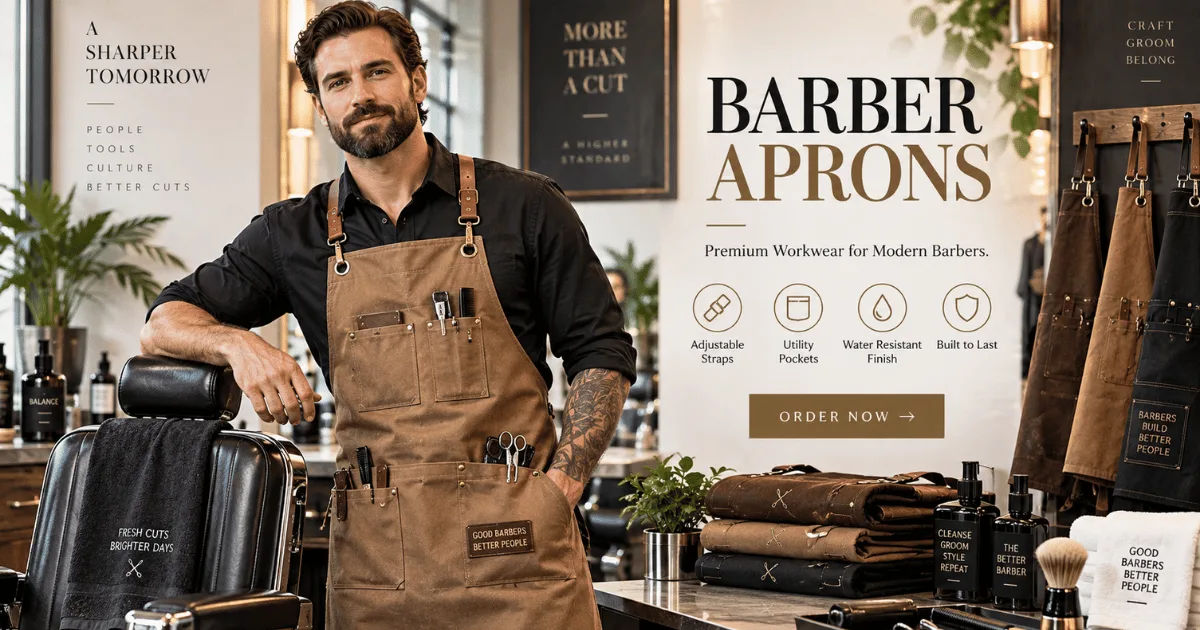
A logo on an apron is more than decoration. It can help employees look professional, make staff easier to identify, and keep the business visually consistent. The way a logo appears depends on the apron material, logo size, placement, colors, and decoration method.
Businesses have several options for putting logos on aprons. Embroidery, screen printing, heat transfer, direct-to-garment printing, and patches are some of the most common choices. Each method creates a different appearance and offers different advantages.
Understanding these options makes it easier to choose the right apron style and logo application for a particular business.
Why Do Businesses Put Logos on Aprons?
Branding is one of the main reasons companies choose custom aprons for business. Employees interact with customers throughout the day, so their clothing becomes a visible part of the company's identity.
A well-designed apron can make a team look organized and professional. When several employees wear matching aprons with the same logo, customers can immediately recognize who works there.
Aprons can also reinforce brand recognition. A customer may see the logo several times during a visit, making it easier to remember the business later.
For businesses that provide catering or mobile services, branded aprons can be especially useful. Employees may work at weddings, festivals, markets, corporate events, and other locations where the company's physical storefront is not present.
Where Is the Logo Usually Placed?
The location of a logo has a major effect on how visible the branding will be. There is no single placement that works for every business.
Chest Placement
The upper chest is one of the most popular locations for a logo. It provides a clear viewing area without making the apron look overcrowded.
A smaller logo on the chest can create a clean and professional appearance. This option works particularly well for restaurants, cafés, bakeries, and hospitality businesses.
Chest placement is also practical because the logo usually remains visible while an employee is standing behind a counter or serving customers.
Center Placement
Some businesses place a larger logo in the center of the apron. This approach makes the branding more noticeable.
Center logos can work well when the business has a strong visual identity or a logo with an interesting design. However, the logo should not be so large that it makes the apron uncomfortable or visually overwhelming.
Upper Pocket Placement
If an apron has a chest pocket, the logo can sometimes be positioned above or beside it. This gives the garment a balanced appearance.
Businesses using custom aprons for business should check the pocket design before finalizing the logo position. A pocket, seam, strap, or fold can interfere with the artwork.
Lower Apron Placement
A logo can also be placed lower on the apron. This is less common but may work for certain brands that want a subtle design.
Lower placement can also be useful when the upper section is reserved for employee names or another piece of information.
How Is Embroidery Used on Aprons?
Embroidery is one of the most recognizable ways to add a logo to custom aprons for business. Instead of printing ink onto the fabric, a machine uses thread to stitch the design directly into the apron.
This creates a textured, professional appearance. Embroidery is particularly popular with restaurants, hotels, cafés, catering companies, and hospitality businesses.
Benefits of Embroidered Logos
Embroidered logos can be durable and are generally well suited to workwear that is washed regularly.
Thread also gives the logo a slightly raised appearance. This can make simple logos look premium and substantial.
Embroidery works especially well for logos with clear shapes, lettering, and limited colors. It may be less suitable for highly detailed images or designs containing very small text.
Choosing Embroidery Colors
The thread colors should create enough contrast with the apron. A dark logo on a dark apron may look attractive in theory but become difficult to see from a distance.
Businesses should consider how the logo looks under indoor lighting, outdoor lighting, and different backgrounds before choosing thread colors.
How Does Screen Printing Show a Logo?
Screen printing is another common method used for custom aprons for business. In this process, ink is applied to the fabric through a prepared screen.
The result is generally a flat printed design. It can produce strong colors and works well for larger logos or bold artwork.
Screen printing is often useful when a business wants the same logo printed across a larger number of aprons.
It can also be a practical option when the logo contains graphic elements that would be difficult to reproduce through embroidery.
When Is Screen Printing a Good Choice?
Screen printing can be a good choice for simple, bold designs. It is particularly useful when a company wants a larger logo without adding the extra weight or texture that embroidery can create.
However, the fabric and ink combination matters. The printer should select an appropriate process based on the apron material.
What Is Heat Transfer Printing?
Heat transfer involves placing a printed or cut design onto the apron using heat and pressure.
This technique can reproduce detailed artwork and may work well for logos containing several colors. It is also useful for smaller orders where traditional printing methods may not be practical.
Heat transfer is frequently used for personalized workwear because individual names, numbers, or small design changes can be added relatively easily.
The quality of the transfer depends on the material, application temperature, pressure, and overall production process.
Can Businesses Use Patches for Logos?
Patches offer another approach to branding custom aprons for business. Instead of applying the logo directly to the apron, the logo is created as a separate patch and then attached.
Patches can provide a distinctive appearance. They may be embroidered, woven, printed, or made using other materials.
This approach can work particularly well for businesses with a casual, rustic, outdoor, or handmade brand identity.
A patch can also be replaced more easily in some situations, depending on how it is attached.
How Does the Apron Material Affect the Logo?
The fabric of custom aprons for business can influence which logo application method works best.
Cotton, polyester, denim, canvas, blended fabrics, and other materials can react differently to heat, stitching, and ink.
For example, a thick canvas apron may provide a strong surface for embroidery. A lightweight fabric may require a different approach to avoid excessive weight or distortion.
Before ordering a large quantity, businesses should ask the supplier which decoration method is appropriate for the specific fabric.
How Large Should an Apron Logo Be?
Logo size should be large enough to recognize but not so large that it dominates the entire apron.
A small chest logo can look professional and understated. A larger center logo may be better for businesses that want maximum visibility.
The design itself also matters. A logo with small lettering may need to be larger than a simple symbol.
When creating custom aprons for business, it is useful to consider the viewing distance. A logo that looks perfect on a computer screen may become difficult to read when viewed from several feet away.
Should the Business Name Be Included?
Some businesses use only their logo, while others include the company name underneath it.
If the logo is not immediately recognizable, adding the business name can improve identification.
A website address, social media handle, slogan, or short phrase can also be included when appropriate. However, adding too much information can make the apron look cluttered.
The best designs usually focus on one primary message.
What Makes a Good Apron Logo Design?
A good logo should remain recognizable when printed or embroidered at the chosen size.
Simple designs often perform better than extremely complicated artwork. Strong shapes, readable lettering, and appropriate contrast can make a logo easier to recognize.
Businesses should also consider how the logo looks against the apron color.
For custom aprons for business, the goal is not simply to place every possible branding element on the garment. The goal is to create a design that customers can recognize quickly.
Do Logos Make Aprons Look More Professional?
Branded aprons can create a more organized appearance, especially when an entire team wears matching garments.
Customers can quickly identify employees, which can be useful in busy restaurants, cafés, bakeries, and event environments.
A consistent uniform can also help employees feel like part of the same team. The apron becomes an extension of the company's visual identity rather than simply another piece of protective clothing.
However, the apron itself should still be comfortable and practical. Branding should never come at the expense of usability.
How Should Businesses Choose a Logo Method?
The best method depends on several factors.
First, consider the logo itself. Simple logos with clear lettering can be excellent candidates for embroidery. Detailed, colorful artwork may be better suited to printing.
Second, consider the apron material. The decoration method should be compatible with the fabric.
Third, think about washing frequency. Restaurant and catering aprons may require frequent laundering, so durability becomes particularly important.
Finally, consider the desired appearance. A business seeking a traditional premium look may prefer embroidery, while a company wanting a bold graphic design may prefer printing.
Should Businesses Order Samples First?
Ordering a sample before placing a large order can prevent expensive mistakes.
A sample allows the business to check the actual apron color, fabric quality, logo size, placement, stitching, print quality, and overall appearance.
This is particularly important when ordering custom aprons for business in large quantities.
A logo may look different when printed on fabric compared with how it appears on a computer or phone screen.
Testing the sample can also reveal practical issues. For example, a logo might be positioned too close to a seam or pocket, or the chosen design may be difficult to see against the apron color.
How Can Businesses Keep Logoed Aprons Looking Good?
Proper care can help preserve both the apron and its branding.
Businesses should follow the manufacturer's washing instructions. Excessive heat, harsh chemicals, or inappropriate drying methods can affect certain printed or transferred designs.
Embroidered logos generally need less concern about fading in the same way printed designs can, but the surrounding fabric can still wear out over time.
It is also useful to inspect aprons regularly. If employees wear them every day, replacing damaged or heavily worn garments can help maintain a professional appearance.
Are Custom Aprons Useful for Small Businesses?
Absolutely. Custom aprons for business are not limited to large restaurant chains or established companies.
Small cafés, bakeries, food stalls, catering businesses, salons, coffee shops, and independent restaurants can use branded aprons to create a recognizable appearance.
For a small business, even a simple logo on a well-designed apron can make the team look more established.
The key is consistency. If the same logo, colors, and apron style are used across the team, the branding becomes much more noticeable.
What Should Businesses Consider Before Ordering?
Before placing an order, businesses should review the complete design rather than focusing only on the logo.
Consider the apron color, fabric, size range, strap style, pockets, logo location, decoration method, number of colors, and expected washing frequency.
It is also important to confirm the artwork requirements. Some suppliers may request a high-resolution logo or a specific file format.
Ask for a digital proof before production. This gives the business an opportunity to check spelling, proportions, colors, and placement.
A few minutes spent reviewing the proof can prevent an entire batch of incorrectly branded aprons.
Conclusion
Custom aprons for business provide a practical way to combine workwear with brand identity. A well-placed logo can help customers identify employees, strengthen visual recognition, and create a more professional appearance.
There are several ways to display a logo, including embroidery, screen printing, heat transfers, and patches. The right choice depends on the apron fabric, logo design, desired appearance, budget, and expected use.
Logo placement matters just as much as the decoration method. Chest and center placements are popular because they provide good visibility, while pocket and lower placements can create a more subtle appearance.
Businesses should also pay attention to logo size and contrast. A design that is too small may be difficult to recognize, while an oversized design can make the apron look unbalanced.
Perhaps the most important step is testing the design before ordering a large quantity. A sample can reveal issues with fabric, color, logo placement, stitching, printing, and overall comfort.
When planned properly, custom aprons for business become more than uniforms. They become a simple and effective branding tool that employees can wear while doing their everyday work.
The best apron branding is usually not complicated. A comfortable apron, a recognizable logo, appropriate colors, and consistent placement can be enough to create a professional impression every time customers see the team.

Leave a Reply